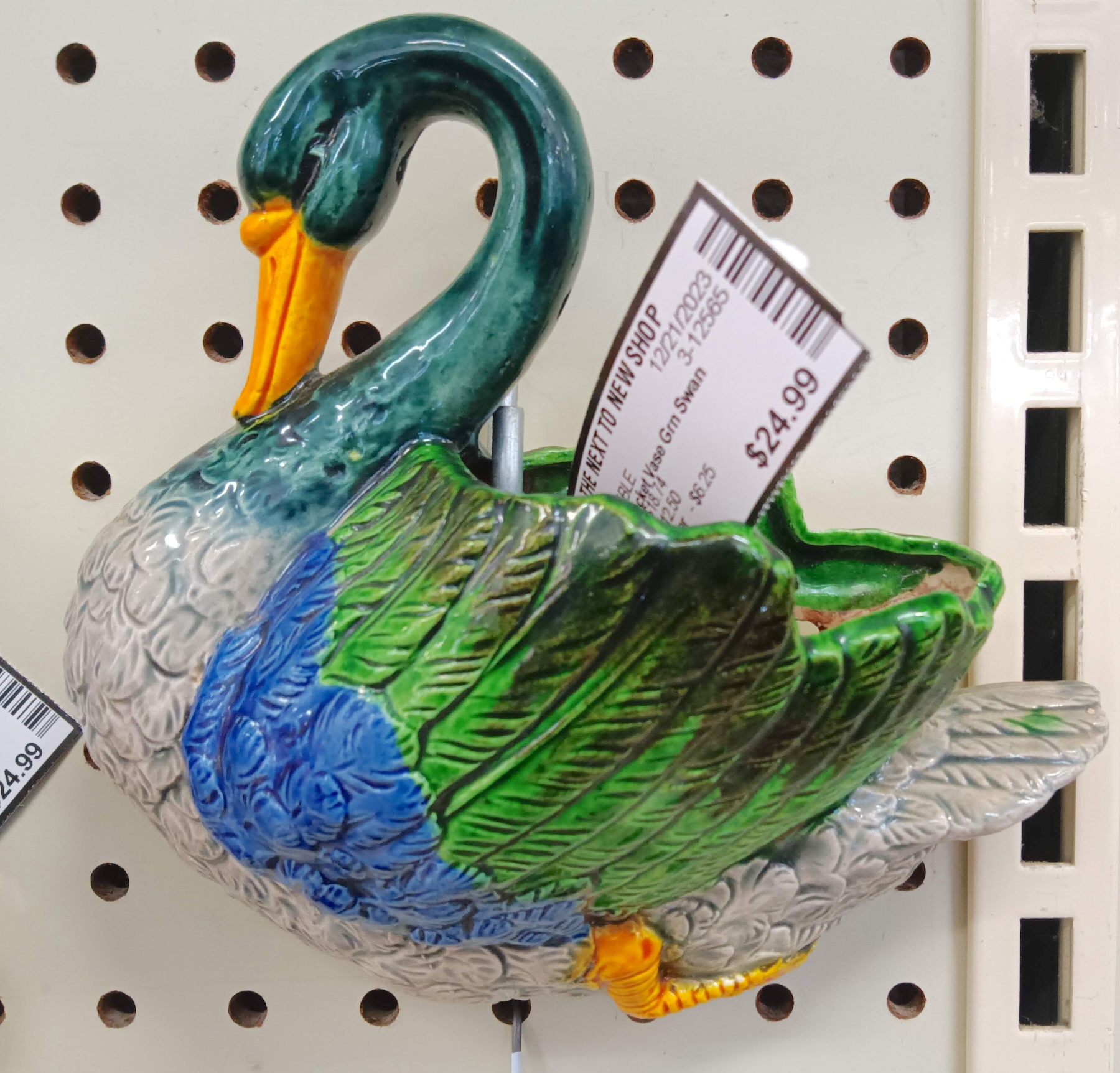
. . . is what you will want to do when you see this wonderful array of vintage wall pockets.

A wall pocket, also known as a wall vase, is a vase that is flattened on one side and intended to hang on a wall to hold flowers or root plant cuttings. The Victorians, with their love of fresh flowers and the desire to ornament pretty much every square inch of their homes, popularized wall pockets. These pretty and practical pockets were made in a wide variety of style and materials, such as glass, majolica, pottery, and porcelain. From the early 1900s through the beginning of WWII, wall pockets were also popular in the United States. Some were made in Europe and the United States, but many of the most colorful and imaginative creations originated in Japan.
Luster glazes were a popular way to add a pop of bright color and often are found on Japanese products
This piece is decorated in a style known as moriage, in which raised lines of clay slip were used to add texture and depth. This method was widely used in Japanese pottery, especially items intended for export.
This vase has a dainty art deco design.
Some wall pockets could be large and elaborate.
Pairings of wall pockets were popular.
While most of the wall pockets in our trove are Japanese, we also have some examples of American manufacture. This piece was made by The Nelson McCoy Pottery Company. Established in 1910 in Roseville, Ohio, as the Nelson McCoy Sanitary and Stoneware Company, the company changed its name to the Nelson McCoy Pottery Company in 1933, concentrating on more decorative wares.
All posted items are for sale at Next-to-New, but things can sell quickly!