Showing posts with label cranberry glass. Show all posts

Wednesday, August 14, 2024

Extraordinary Epergne!

This glorious example of handblown glass is an epergne, an elaborate centerpiece that would beautify any banquet. The epergne first appeared in the early 1700s. Originally wrought of silver, the epergne featured a center basket or bowl from which radiated branches holding little bowls or baskets, all filled with fruit, sweets, and other treats. It is thought that epergne is derived from the French word "épargne" for "saving," perhaps because dinner guests could help themselves to a laden epergne situated on a sideboard, saving them the trouble of passing dishes. In the Victorian period, elaborate epergnes of brilliantly colored glass. like this stunning example, were used to display fragrant bouquets of fresh-cut flowers.


The rosy red glass is called "cranberry," a color especially favored by the Victorians. The rich red of cranberry glass, also known as gold ruby glass, is achieved by adding gold salts or colloidal gold to the molten glass. Because of the use of gold in its creation, cranberry glass was used primarily to create expensive glassware and ornaments. A piece as ornate as this epergne, with its extensive use of costly cranberry glass, served to display not only flowers, but also its owner's taste and class.


All posted items are for sale at Next-to-New, but things can sell quickly!

6179-936


Thursday, July 21, 2022

Hail! Fairy Queen. . .

adorn'd with flowers,
Attended by the smiling hours,
'Tis thine to dress the rosy bowers
In colours gay

"The Return of May," Felicia Dorothea Browne, 1808

This enchanting fairy, framed by delicate flowers, foliage, and flittering butterflies, is an example of elegant enameled glassware that became popular in the late 1800s. Against the soft rosy background of cranberry glass, an artist skillfully painted layers of white enamel, creating the effect of a carved cameo. In fact this style of enameled glass was produced to compete with the more costly cameo glass. Cameo glass was typically made of two fused layers of glass, a lighter (usually white) outer layer over a contrasting darker shell; the piece was then cut and etched to create a cameo-like design. 


The subtle shading and layering gives the images a three-dimensional effect. 


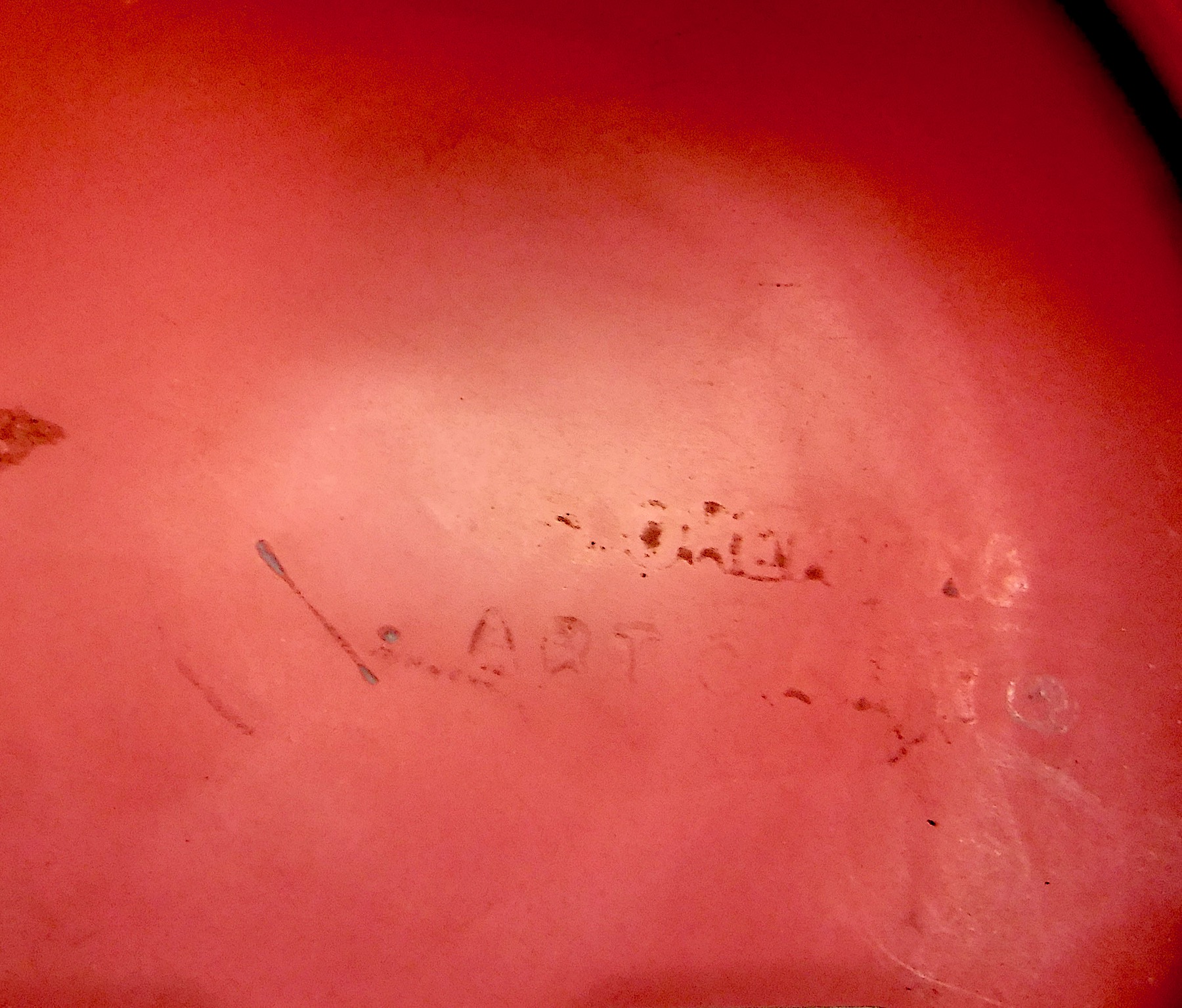
Underneath, the vase is faintly acid-etched "FLORENTINE ART CAMEO." This was one of the lines registered by Lazarus and Rosenfeld, a British company that specialized in high-end glassware, china, and pottery. In 1883, they established their glass refinery in Kamenické Šenov in Bohemia (now part of the Czech Republic).  The refinery ceased operations in 1934.


All posted items are for sale at Next-to-New, but things can sell quickly!

15885-1