Saturday, July 23, 2022

Astounding Squash Blossom

This stunning sterling silver and coral necklace was crafted by skilled Navajo silversmith, Fatoya Yazzie, renown for her contemporary take on traditional designs. 


This style of necklace is known as "squash blossom," named after the decorations dangling from the sides. Although the squash is an important crop for Southwestern tribes, the Navajo word for these designs means "bead that spreads out." The name "squash blossom" may be the result of a  mistranslation or misunderstanding, but this style of bead has been created by Navajo silversmiths since the late 1800s and the "squash blossom" name appears to have been around almost as long. Some think the squash blossom design is actually a representation of the crown-like tip of a pomegranate, a design element often found in early Spanish clothing and jewelry. The red coral was introduced to Native American silversmiths by European traders. 

The crescent-like pendant is known as a "naja." It originated in Moorish Spain as an amulet to ward off evil and the design is believed to have been brought to the Americas by Spanish conquistadors. 


The back of the naja is stamped "Sterling" and with the artisan's initials, "FY."


 All posted items are for sale at Next-to-New but things can sell quickly!

15878-3


Thursday, July 21, 2022

Hail! Fairy Queen. . .

adorn'd with flowers,
Attended by the smiling hours,
'Tis thine to dress the rosy bowers
In colours gay

"The Return of May," Felicia Dorothea Browne, 1808

This enchanting fairy, framed by delicate flowers, foliage, and flittering butterflies, is an example of elegant enameled glassware that became popular in the late 1800s. Against the soft rosy background of cranberry glass, an artist skillfully painted layers of white enamel, creating the effect of a carved cameo. In fact this style of enameled glass was produced to compete with the more costly cameo glass. Cameo glass was typically made of two fused layers of glass, a lighter (usually white) outer layer over a contrasting darker shell; the piece was then cut and etched to create a cameo-like design. 


The subtle shading and layering gives the images a three-dimensional effect. 


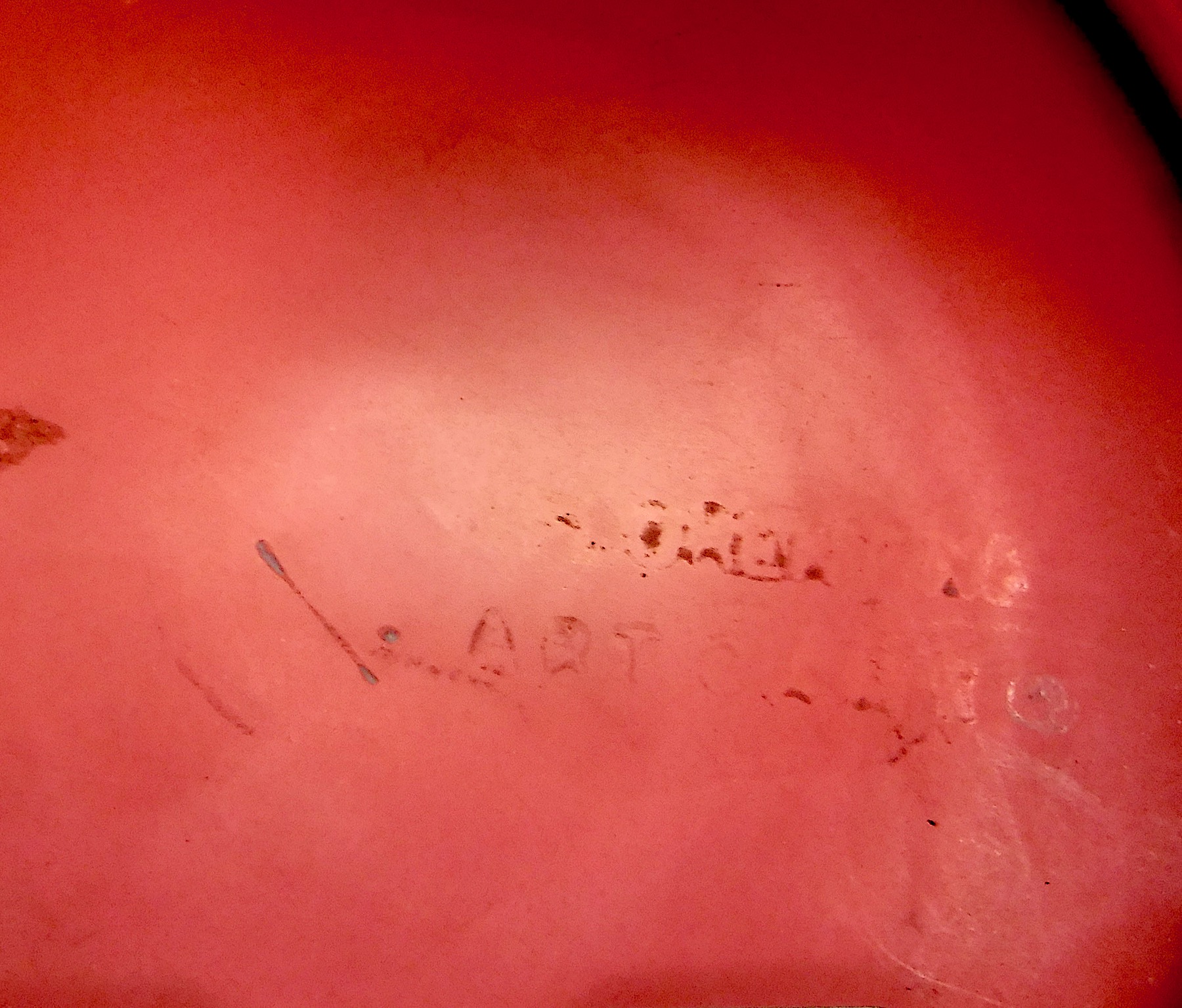
Underneath, the vase is faintly acid-etched "FLORENTINE ART CAMEO." This was one of the lines registered by Lazarus and Rosenfeld, a British company that specialized in high-end glassware, china, and pottery. In 1883, they established their glass refinery in Kamenické Šenov in Bohemia (now part of the Czech Republic).  The refinery ceased operations in 1934.


All posted items are for sale at Next-to-New, but things can sell quickly!

15885-1


Thursday, July 14, 2022

Mission Accomplished. . .

. . . is certainly what the proud future owner of this magnificent mission settee set would say when this outstanding oak furniture comes to grace his or her home. 

Dating from the 1910s, these beautifully crafted chairs and matching settee are done in American mission style. The American mission style, although referencing the missions of colonial California, actually evolved from the Arts and Crafts movement. Beginning in Britain in the 1890s, the movement  was a reaction against the over-ornamented and faux-historical style popular in Victorian England, advocating instead for balanced and unembellished designs crafted from natural materials. The American mission style is known for its solid and sturdy furniture, with simple lines and fine craftsmanship that underscores the natural beauty of the wood, typically oak. The unpretentious and understated style fits well with any decor from traditional to minimalist to mid-century modern. 

The set is attributed to the Michigan Chair Company, founded in 1890 in Grand Rapids, Michigan. The company came to produce chairs and accompanying occasional pieces in a wide variety of styles and woods. It first introduced a line of mission chairs as early as 1898, but by 1909 began creating more period revival and ornamented designs, such as Colonial, Elizabethan, Chippendale, and French. The company is still in business, although it has not produced furniture since 1970, instead offering custom solid hardwood steam bending.

All posted items are for sale at Next-to-New, but things can sell quickly!


15825-2


Thursday, June 23, 2022

Superb Pitcher

Summer is the time to enjoy a tall cold glass of iced tea or lemonade and this stunning sterling pitcher is just the the thing for serving your guests such refreshing libations.


Underneath, it is stamped "Sterling 925," but its hand-hammered design gives a clue to this shimmering silver pitcher's origin. . . .


The shoulder of the pitcher is adorned with in high relief with stylized flowers. Known as "Aztec rose," this pattern appears widely on vintage Mexican sterling, from flatware and serving pieces to jewelry. The roses are rendered in repoussé, meaning that they were shaped by hammering from the reverse side. The skilled silversmith then added further detail by engraving or stamping lines in the leaves and petals.


All posted items are for sale at Next-to-New, but things can sell quickly!

15735-242


Monday, May 16, 2022

Casting a Lovely Light

These large lavishly decorated porcelain pieces are from China and are known as wedding lanterns. The  piercings or reticulations worked into the extravagant designs would let out a glowing light, On each edge of the hexagonal lanterns is a stylized bat. Bats were revered in China as symbol of good luck and happiness. In Chinese, the word for bat is "fu" and is pronounced the same as the word for good fortune. Bats, like the ones on these lovely lanterns, were often depicted in red, the color representing joy. Dangling from each bat's mouth is a representation of a red paper lantern, a symbol of joy and peace. Below the bat in red is a stylized symbol called "Shou," representing longevity.


Each lantern comes in two pieces, a candlestick base with the matching shade. The fact that these delicate pieces survived intact and together all these decades certainly suggests that they are indeed imbued with good fortune!


Every inch of the surface of each lantern is covered with elaborate enamel designs. On each side is a round medallion, either portraying a bird perched near a lushly blooming peony. . . 


. . . or a young boy at play.


Peonies represent wealth and prosperity. The bird is a magpie, is a symbol of happiness. 


In traditional Chinese culture, having sons to carry on the family name was vital. Depictions of young boys at play were signs of good fortune. No doubt these lanterns were intended to bless the happy couple with many sons.


 All posted items are for sale at Next-to-New, but things can sell quickly!

15784-237, 238


Sunday, May 8, 2022

Trailblazing Buster Brown

I’m Buster Brown, and I live in a shoe. That’s my dog, Tige, and he lives there, too. 

Jingle for Buster Brown shoes

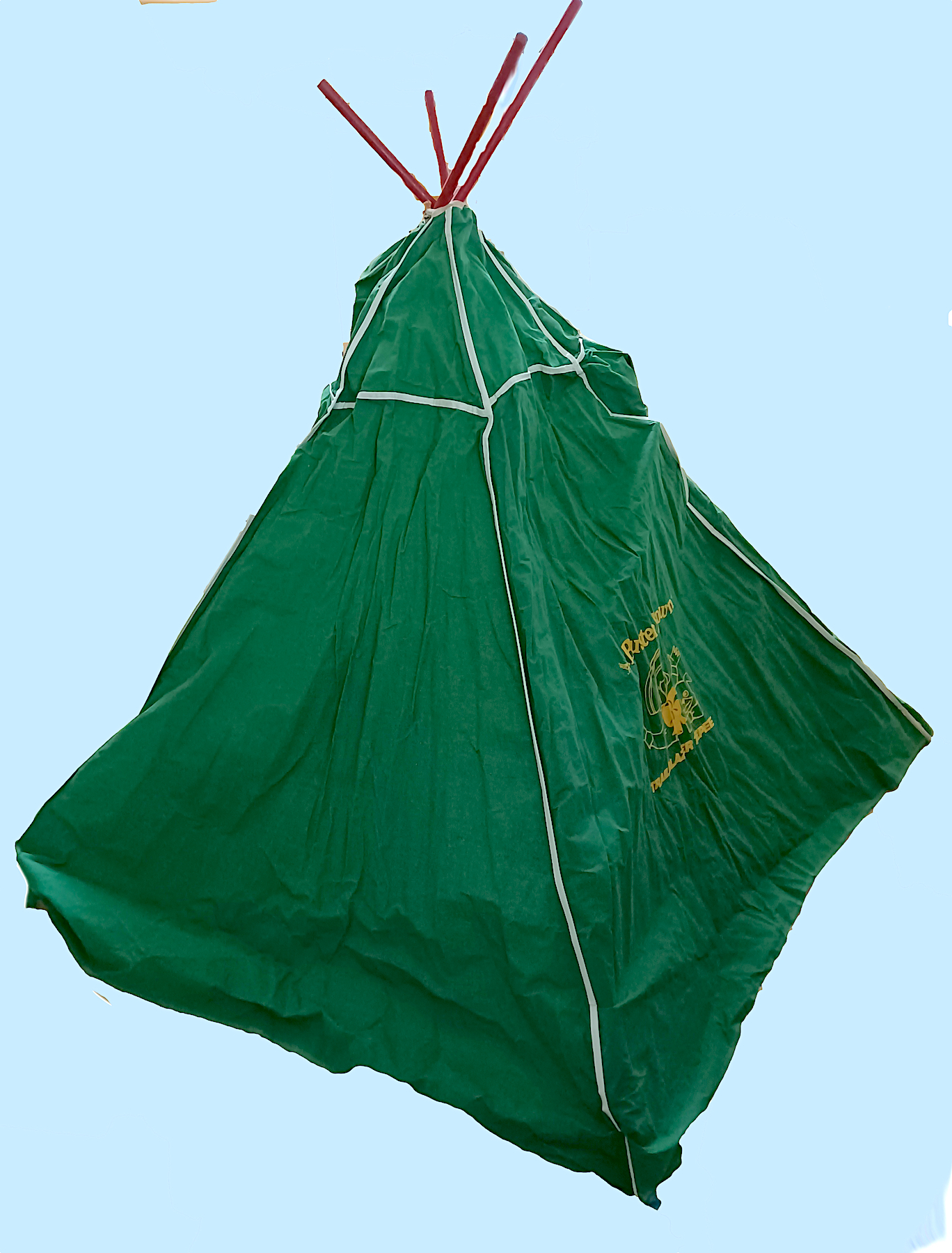
Apparently sometimes Buster Brown left his shoe to camp out in this terrific Trailblazer Teepee. Buster Brown was a cartoon character created by Richard F. Outcault in 1902. The mischievous only son of wealthy parents, Buster and his dog Tige were always getting into adventures, and trouble, usually ending with Buster being spanked by his mother. The last panel of each comic strip was of Buster painting a poster with a sarcastic resolution. The comic was extremely popular. Buster's outfit, a belted drop-waist tunic adorned with an oversized floppy bow, worn over short pants, was dubbed the Buster Brown suit and became a popular fashion for young boys of the period. Outcault cashed in on Buster's popularity, setting up an exhibit at the 1904 St. Louis World's Fair, selling licensing rights to some 200 companies. The best known of these licensees was Buster Brown shoes. The Brown Shoe Company also had an exhibit at the fair and decided that linking the popular Buster to their children's shoes would be lucrative. The company acquired the rights to the names and images not only of Buster Brown and Tige, but also Buster's comic strip girlfriend, Mary Jane. Although Outcault ended the strip in 1923, the popularity of Buster Brown lived on, in part due to his link with Buster Brown shoes. Brown Shoes hired actors, always accompanied by a dog, to portray Buster Brown at shoe stores, department stores, and theaters. The company issued comic books with Buster Brown's adventures, which were given away as premiums at their stores. A Buster Brown radio show premiered in 1943 and moved to television in 1950. Over the years, the company modified and updated the images of Buster and Tige, although Buster always retained his blond pageboy haircut, bowtie, and broad-brimmed hat.


The tent comes complete with instructions for erecting the "Qwik Wam" and was manufactured by  Hettrick Manufacturing Company. Founded in Toledo, Ohio in the 1890s, Hettrick began as a manufacturer of canvas products, such as awnings and wagon covers. Over the decades, it expanded its line to include a variety of tents and camping equipment, outdoor furniture, and even hunting garb. Hettrich also produced tents featuring Roy Rogers and Trigger in the 1950s. The company was sold in 1962.

All posted items are for sale at Next-to-New, but things can sell quickly!

Sunday, April 24, 2022

Terrific Trifari

This pretty pussycat pin with gleaming green eyes is a very collectible piece from Trifari, an American company renown for its beautifully crafted costume jewelry. 


As big as it is beautiful, this vintage brooch displays the solid construction, meticulous detail, and creative craftsmanship that Trifari was famous for. This fascinating feline would enhance any outfit.


Trifari was founded in 1919 by Gustavo Trifari, who came from an Italian family of goldsmiths. Collectors agree that the force behind Trifari's quality and creative designs was designer Alfred Philippe, who joined Trifari in 1930. Philippe had previously worked for high-end fine jewelry companies Cartier and Van Cleef & Arpels and he applied the same craftsmanship,  fabrication techniques, and quality control to Trifari's pieces. Philippe remained with Trifari as the lead designer until he retired in 1968, and collectors consider the pieces produced during Philippe's tenure among some of the finest and most desirable pieces of collectible costume jewelry.  Trifari designed custom pieces for Broadway and Hollywood stars and Mamie Eisenhower even wore Trifari to her husband's inauguration. 

Philippe introduced the famous Trifari crown brooches, enhanced by shimmering stones, and the pins were so popular that Trifari added a crown to its signature mark around 1937. This classy cat carries the Crown Trifari mark with a copyright symbol, dating it from 1955 to 1969. 


All posted items are for sale at Next-to-New, but things can sell quickly!

15725-4